Under the law of Hong Kong, intoxicating liquor must not be sold/supplied to a minor in the course of business. 根據香港法律,不得在業務過程中,向未成年人售賣或供應令人醺醉的酒類。
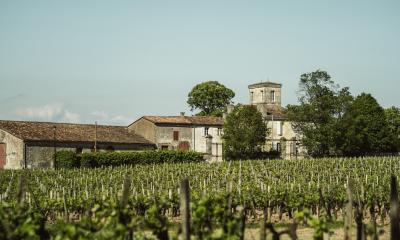
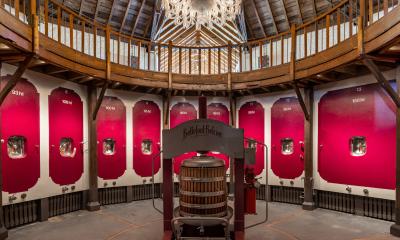
Domaines Barons de Rothschild (Lafite) introduces Anseillan - a different expression of the Lafite terroir. Anseillan is not a new wine from DBR (Lafite) stable, it has always been an integral part of Lafite yet is a completely separate wine in its own right. Not a chateau, Anseillan is a wine, named for a ‘lieu-dit’ - a named locality. Anseillan is a blend of meticulously selected vineyard plots, born of many years of intense scrutiny, research and trials at the capable hands of Chateau Lafite’s technical teams. Located at the very heart of the hamlet, they have been defined precisely within the AOC Pauillac. The initiation of the project dates back to 2014, during a blending session for the Lafite team. It started out slowly, at first making just a few hundred magnums every year. “We waited to see how these bottles evolved,” explains Saskia de Rothschild. “In 2021, we tasted all the trials we had produced for every past vintage and found there was something there.” That’s when the team decided to release this wine with the vintage 2018.
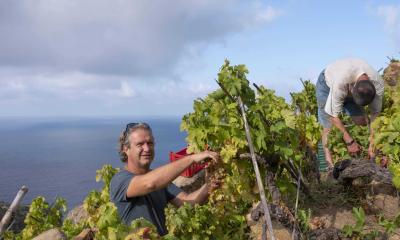
Bibi Graetz is a trailblazing Tuscan winery celebrated for its dynamic, handcrafted wines that embody the soul of Italy’s most treasured vineyards. Founded in 2000 by the artist-turned-winemaker Bibi Graetz, the estate champions ancient, organic vineyards across Tuscany’s historic sites. Blending traditional methods with innovative techniques, Graetz focuses on revitalising indigenous varieties such as Sangiovese, Canaiolo, and Colorino, crafting wines that express the untamed beauty of their terroir through minimal intervention and meticulous care. Renowned for their vivid intensity and artistic flair—each bottle adorned with Graetz’s own paintings—the wines balance tradition with modern innovation. From the flagship Testamatta (a pure Sangiovese) to the acclaimed Colore and vibrant Casamatta range, Bibi Graetz’s creations have garnered global praise for their depth, elegance, and originality. The winery has received widespread acclaim from wine critics, including Robert Parker, James Suckling, and Jane Anson, among others.

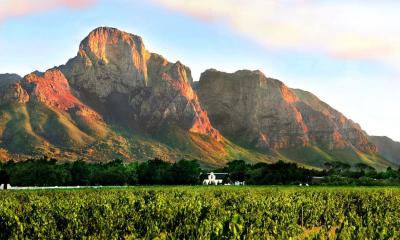
Boschendal (literally meaning “Bush & Valley”) was established in 1685, making it one of the oldest wineries in the New World. The land was originally granted in 1685 to the French Huguenot emigre, Jean Le Long, who sought sanctuary in the Cape. Ideally situated between the iconic areas of Stellenbosch & Franschhoek, this position allows for a variety of cultivars to flourish; showing great balance, complexity and varietal typicity. The estate is proud to carry WWF Conservation Champion status and is globally recognised for its biodiversity and sustainability practices. Boschendal has three separate cellars for the crafting of quality Cap Classique, White and Red wines; each with their own respective winemakers whom are dedicated to producing a number of South Africa’s most awarded wines.
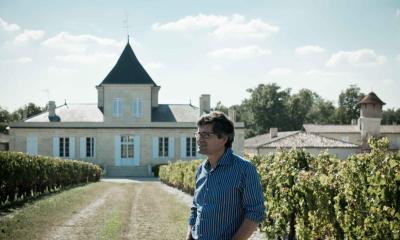
In 2020, Henri Lurton announced the creation of an exceptional white wine, Brane Cantenac Blanc, produced on the terroir of his legendary estate. Brane Cantenac Blanc is the estate’s first white wine, a magnificent expression of a singular micro-terroir and an exquisite complement to Chateau Brane Cantenac, Baron de Brane and Margaux de Brane. Sauvignon Blanc (80%) and Semillon (20%) vines today thrive on three dedicated hectares of land. Brane Cantenac Blanc is the ultimate incarnation of Henri Lurton’s desire to create a dry white wine delivering fruit, freshness and a perfect balance between roundness and acidity. In 2022, the Chateau launched the 2nd White wine Baron de Brane Blanc. Production of both wines is highly limited.
Castello Tricerchi is a super star in Montalcino, widely appreciated by international wine critics and media including James Suckling, Wine Enthusiast and Falstaff. Their wines have been featured in James Suckling’s Great Wines of Italy. The Tricerchi family was a part of the Sienese oligarchy back in the 12th century. They have established Castello Tricerchi in 1441, and today lived and managed by their 17th generation, the Squarcia family. The estate extends for 400 hectares on the north side of Montalcino, using organic agricultural practice. The vineyards, planted in 1995, cultivated with Sangiovese at 300 meters above sea level with north and west exposure. This position benefits from the unique microclimate and terroir of the north side of Montalcino, cooler and more protected, guaranteeing constant ripening of the grapes, for wines of marked freshness and elegance. Our highly rated Tricerchi selection includes their top value Rosso di Montalcino, their flagship Brunello di Montalcino which is a gourmand wine offering great complexity and structure, and the special cuvee “Anno Domini 1441”, being extremely limited in production (merely 2,000 bottles for vintage 2016) available during the best vintages.
Champagne Nicolas Feuillatte, the third largest Champagne brand worldwide and the best-seller in France today, has seen remarkable improvement in quality over the years. It is a brand rooted in its territory, born in enchanting earth, with 4,500 wine growers. We believe that luxury is all about elegance and attitude, emotion and pleasure, appreciation of the good and the beautiful; therefore, champagne is not reserved solely for exceptional events, but it also brightens our very own special moments, bringing out the beauty of the present. We speak to those who recognise the value and the beauty in the here and now, and who know how to enjoy life’s enchanted moments.
The history of Pertois Lebrun dates back to the early 1900s, with Clement and Antoine being the 5th generation of winegrowers today producing exclusively Grands Crus Blanc de Blancs, from their 9 hectares of vineyards spreading across the most prestigious villages of Cote des Blancs with “Grand Cru” distinction: Cramant, Le Mesnil-sur-Oger, Chouilly, Oiry and Oger. They approach the vines with respect and humility, by using eco-responsible and sustainable winegrowing techniques. Their range of sustainable practices is naturally reflected in the quality of their grapes, an indispensable factor for wines that express all the aromatic nuances and frank minerality of their terroirs of origin, and hence their exceptional quality. The flagship cuvee is L’Extravertie, a blend of Grands Crus from the Cote des Blanc which is a lively expression of freshness and elegance. L’Ambitieuse focuses on the Grands Crus vineyards mainly in Chouilly and Le Mesnil-sur-Oger and is characterized with intensity and aromatic complexity. L’Egoiste is an outstanding Champagne of the range denoting low yield, high concentration and extra ageing of at least 6-7 years.
Champagne Philippe Lancelot is the fifth generation of winegrowers in the commune of Cramant, a grand cru village on the Cote des Blancs. Since 2010, this avant-garde and evolving vigneron has been implementing the organic conversion to his own vineyards covering an area of about 4 hectares in Cramant with miniscule production, a 100% grand cru village, which guarantees an incredible expression of the terroir and the grapes. Their cuvees have been well appreciated by wine critics and medias like Decanter and Andreas Larsson, and are listed globally in many Michelin Starred restaurants.
Created in the late 18th century, the Bellefont-Belcier estate is wonderfully situated on Saint-Emilion’s south-facing slopes, neighbouring Chateau Pavie, Chateau Larcis Ducasse and Chateau Tertre Roteboeuf. The vineyard extends over 13.5 hectares in one piece. It is divided into three distinct areas: the limestone plateau, the South slope clay-limestone, the clayey-sandy parcels.On these different types of soil, we find the three red grape varieties of Bordeaux in the following proportion: 72% Merlot, 17% of Cabernet Franc and 11% of Cabernet Sauvignon spread over 28 plots. The average age of the vines is about 35 years.
Chateau Brown, as its name suggests, bears testimony to the close links that existed between the Bordeaux region and the Anglo-Saxons. Founded in the late Middle Ages when Aquitaine belonged to England, Chateau Brown owes its name to the wealthy Scottish wine trader, John Lewis Brown, who settled in Bordeaux in the late 18th century. An enthusiast of wines and art, this epicurean passed on not only his name, but also his passions to his grandson, the animal painter, John Lewis Brown. Over the years, the haute couture wines of Chateau Brown have seen their quality and reputation soar.
The history of Chateau des Bachelards can be dated back to 1100, when the Benedictine monks of Cluny created the Chateau’s vineyards. Today, it covers 12 hectares of land across Fleurie, Saint Amour, and Moulin a Vent, owned by the very passionate Alexandra de Vazeilles, who is an MBA graduate in viticulture, oenology, finance and marketing, and has a decade of solid experience working at Chateau Latour in Pauillac. Chateau des Bachelards is the first organic and biodynamic pioneer of the Fleurie, Moulin a Vent and Saint Amour appellations. With its remarkable asset of 60-to- 100-year-old vines, the production is miniscule. Their wines are characterized by the combination of the elegance of Burgundy and the delicacy of the Rhone Valley. Not only are the wines being well appreciated by critics including James Suckling and Jancis Robinson, but they are also served in many top Michelin-starred restaurants including Guy Savoy, Alain Ducasse au Plaza Athenee, Pierre Gagnaire etc.
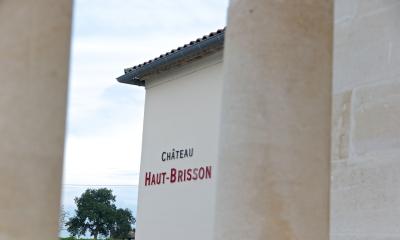
Chateau Haut Brisson was the first property acquired by Peter Kwok and his daughter Elaine in 1997. At the time of purchase, 8 hectares surrounded the house. Today, this Chateau boasts 20 hectares, located on the limstone plateau of Saint- Etienne-de-Lisse and the gravelly hilltops of Saint-Sulpice de Faleyrens. The wines are certified organic since 2010 and production reaches 60,000 bottles. They are made of 90% Merlot and 10% Cabernet Franc, matured during 15 months in 35% new French oak barrels, 35% of 1 year-old and 30% of 2 year-old barrels. Chateau La Grave is the second wine resulting from a barrel selection of wine with less concentration that does not go into the “grand vin”.